
Burning the Clocks
Gift giving and the shortest day

Hi friends,
It’s not particularly original of me to point out that today is the winter solstice. But it’s true. And for people like me, and probably most of you, who don’t subscribe to any particular religion, it arguably makes more sense to pay attention to days like these than to the sanitised, commercialised versions of religious festivals which dominate our festival calendar.
Most years, this thought occurs to me for about five seconds before I forget about it and resume panicking about Christmas shopping. But this year, having found myself back in the West Country for Christmas unexpectedly early, I decided to haul myself out of bed and drive to Avebury to greet the sunrise on the year’s shortest day with a ragtag band of Druids, Wiccans, wizards and seekers of all stripes – a paganistic party to celebrate the return of the light.
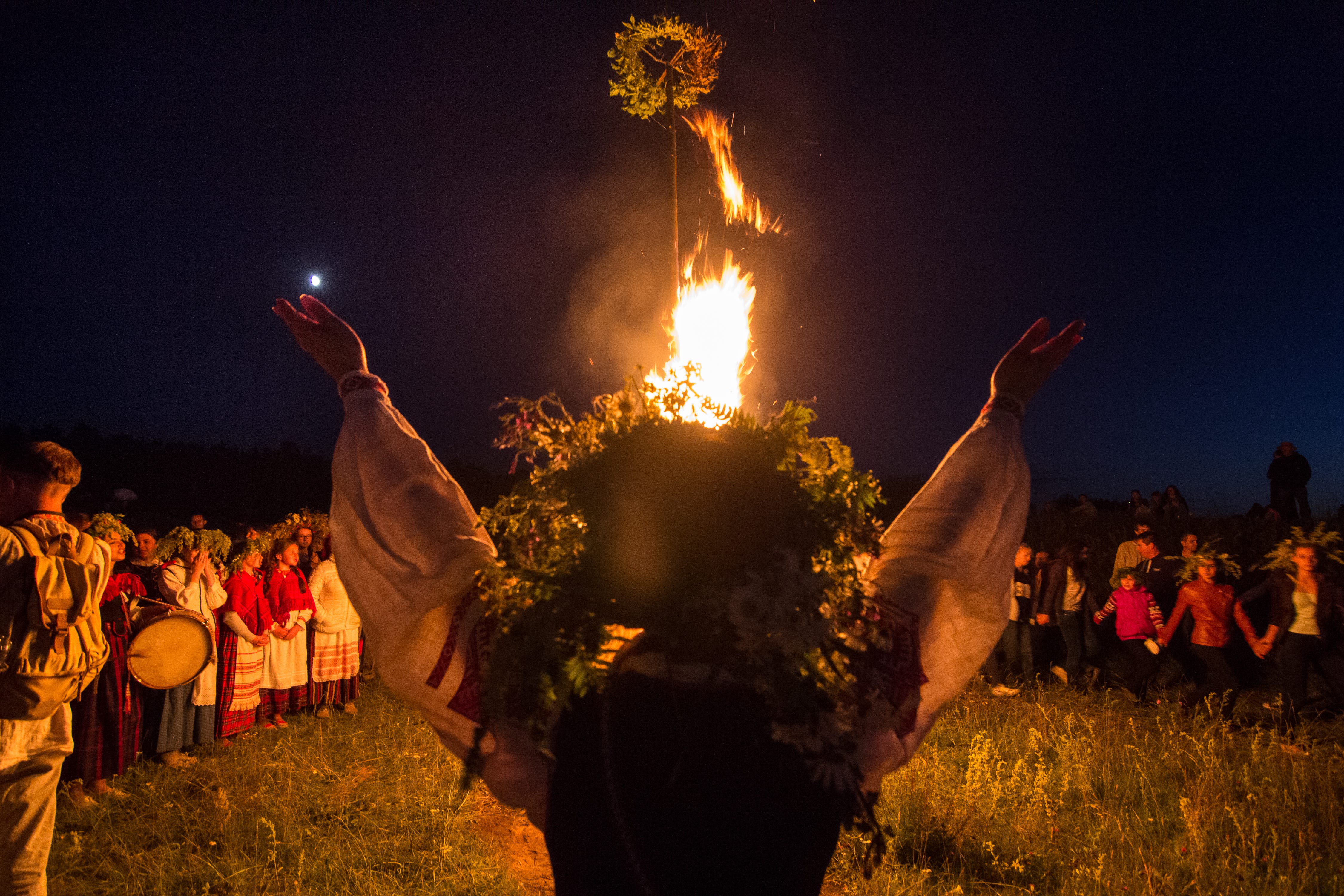
That’s how I imagined it, anyway. It didn’t quite turn out that way. It was cloudy and raining, so there was no sunrise to speak of, and a strong wind – for better or worse – was silencing the best efforts of a shamanic drum circle which had set up shop inside the stones. There were as many curious dog walkers in the crowd as there were practising Pagans, and judging from the TV news, it seemed that most Druids worth their salt had decided to join the throngs down the road at Stonehenge instead.
Even so, I was glad I’d made the effort to mark what is a significant turning point in the year, instead of just letting it pass me by. Festivals which are rooted in the earth – those which mark the solstices, equinoxes and changing of the seasons – have a way of rooting us in turn, reminding us that our cultural behaviours are variations on a theme, elaborations on an ancient tune.
Gathering at sights like Avebury and Stonehenge certainly brings that fact home. So too does the giving of gifts, another ancient practice which we engage in at this time of year. According to English Heritage, in fact, people have been gathering at Stonehenge on the winter solstice to do just that for several thousand years.
Gift giving is likely as old as humanity itself: a means of showing gratitude to our loved ones; an olive branch in a difficult relationship; the marking of a special occasion in the personal or public calendar. In the modern Western world, birthdays are the most obvious personal occasion for gifting, and Christmas the most prominent public one. Gift giving is particularly associated with winter, however, in ways which transcend Christmas and pre-date Christianity.
The Saturnalia of Ancient Rome saw people exchange gifts on December 19th, a date known as the Sigillaria. The event shared its name with the humble figures of wax or clay which were given as gifts. As the Saturnalia was a time of role reversal and the overturning of social norms – masters were said to have served their slaves at the banquet table, for instance – these cheap gifts were preferred in keeping with the egalitarian spirit of the season.
Not so at modern Christmas, which is, as Scrooges everywhere love to point out, the most rabidly commercialised time of year. In Brighton, an arts charity called Same Sky have been attempting to counteract the commodified nature of Christmas with a festival of their own, Burning the Clocks, which has been held in the city each winter solstice since 1994.
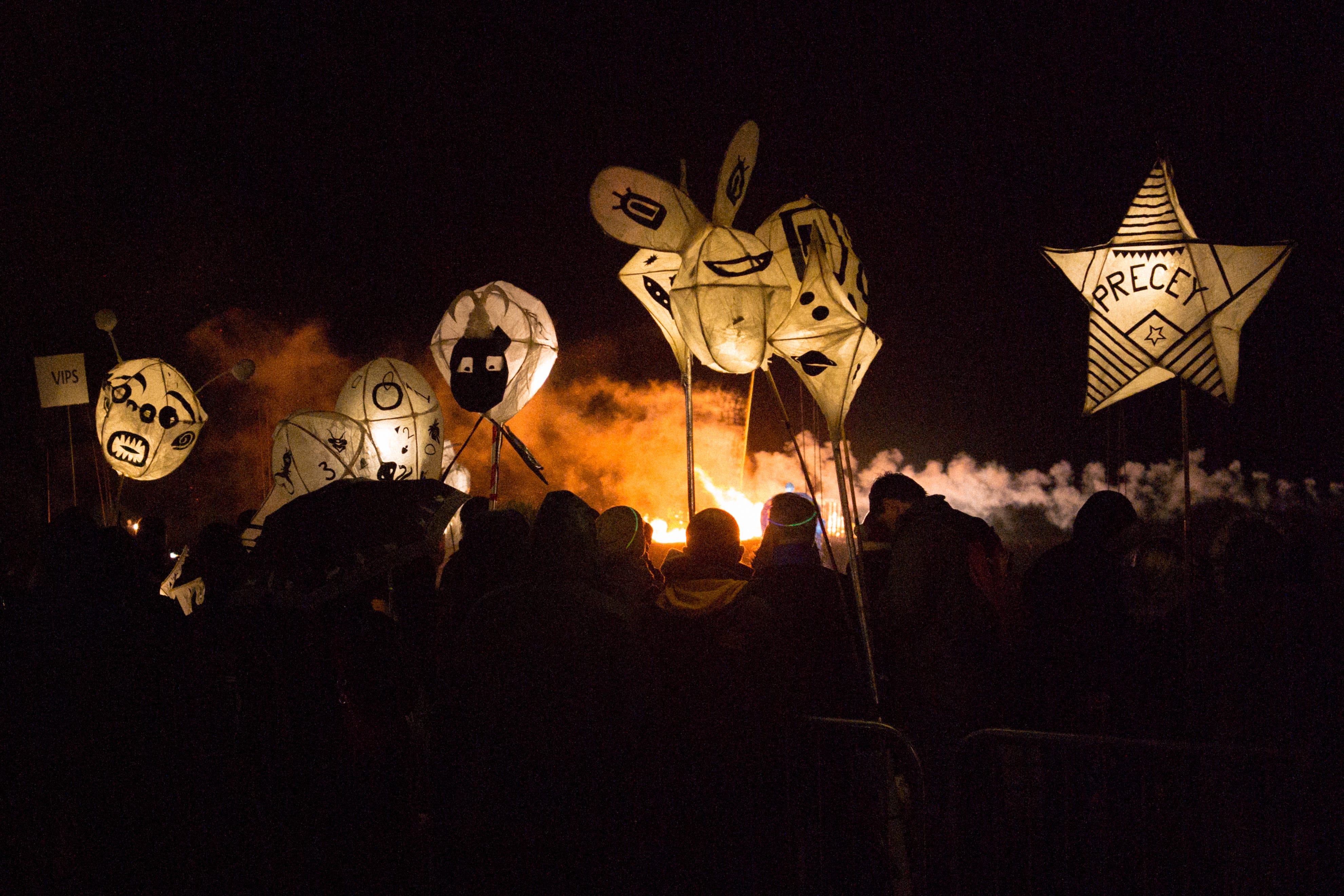
Locals are given free kits with which to create their own lanterns from willow cane and tissue paper; these are then illuminated and processed through the streets to the strains of marching bands. The shape and design of the lanterns changes each year, but they tend to feature clock motifs – a memento mori, perhaps, or just a symbol of the changing of the year. Participants are invited to invest their lanterns with their wishes, regrets, hopes and fears. The lanterns are then burned in a giant bonfire on Brighton Beach, beneath a fireworks display. There is, naturally, a carnival atmosphere.
In all these ways, Burning the Clocks reflects classic festival tropes. And that is deliberate. In offering something free of charge and generated by the community, which harks back to fundamental themes of renewal, letting go of the cares of the old year, and gathering together to celebrate the return of the light, the festival sets out to create “new urban rituals to replace those traditional festivals that were lost in the dash to be new and non-superstitious.”
This year’s Burning the Clocks has the theme Voyager, and is inspired by the words of astronomer Carl Sagan:
”Everyone you love, everyone you know, everyone you ever heard of, every human being who ever was, lived out their lives on a mote of dust suspended in a sunbeam.”
So be good to each other. And if I don’t see you – merry Christmas.
WHAT AN ENJOYABLE WRAP OF HISTORY AGAINST THE BACKDROP OF MODERN COMMERCIALISM...AND OF ONE TOWN BURNING CLOCKS TO FIGHT AGAINST THAT RELENTLESS TIDE. THANKS!